The Cultural Underpinnings of Protection: Why UK Families Handle Life Insurance Differently to the US
At first glance, the fundamental concept of life insurance appears universal: a financial contract designed to provide for loved ones in the event of a premature death. Yet, when one crosses the Atlantic, a closer examination reveals that the practical application, cultural weight, and structural framework surrounding this instrument diverge significantly between the United Kingdom and the United States. These differences are not merely quirks of financial products but are deeply embedded in the distinct social, economic, and historical tapestries of each nation. Understanding why UK families approach life insurance with a different mindset and methodology than their American counterparts requires peeling back layers of public policy, healthcare realities, and cultural attitudes towards debt, family, and the very role of the state in providing a safety net.
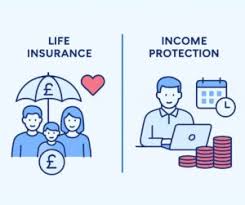
The most profound and foundational divergence lies in the presence—or absence—of a comprehensive, state-backed healthcare system. In the United Kingdom, the National Health Service (NHS) provides healthcare that is free at the point of use. This single pillar of British life removes a catastrophic financial risk that profoundly shapes American insurance needs. In the US, a serious illness is not only a potential death sentence but also a likely bankruptcy sentence for a family; consequently, American life insurance is often intricately linked with critical illness cover and viewed as a vital buffer against medical bankruptcy, even for the deceased’s family left with outstanding bills. In the UK, while private medical insurance exists, the absence of this existential fear of healthcare debt allows life insurance to be purer in its function. It is not primarily a shield against hospital invoices, but a tool for income replacement, mortgage clearance, and maintaining a family’s standard of living. This fundamental shift in purpose influences the sums assured, which in the UK are more often directly tied to specific liabilities like a mortgage, whereas in the US, they may be inflated to account for potential medical and care costs.
This leads directly to the second major differentiator: the relationship with debt, particularly mortgage debt. The UK housing market is dominated by repayment mortgages, where the outstanding balance decreases over time. This has given rise to the ubiquitous “decreasing term assurance” policy—a product less common in the US—where the cover amount reduces in line with the mortgage balance, offering a cost-effective, precise solution. The British approach is often one of efficiency and necessity: life insurance is commonly seen as a non-negotiable adjunct to a mortgage, a practical step to ensure the family home is secure. In the US, where interest-only mortgages and more complex loan structures have been more historically prevalent, and where the cultural narrative often emphasises wealth accumulation and legacy-building, life insurance can be viewed through a dual lens of protection and investment. The popularity of complex products like Whole Life or Universal Life policies, which combine a death benefit with a cash-value savings component, reflects this. In the UK, such products are far rarer; the market is overwhelmingly dominated by straightforward, low-cost term life insurance, reflecting a pragmatic, “pure protection” mindset that separates the functions of insurance and investment.
Finally, the ecosystem of employment benefits and the cultural perception of insurance itself create differing landscapes. In the UK, “Death in Service” benefits—a lump sum payout from an employer’s scheme—are a widespread and standard perk, particularly in professional roles. This provides a baseline of free coverage, which many UK families may see as a primary layer, potentially reducing the perceived urgency or amount of additional private cover needed. In the US, while employer-provided group life insurance exists, its pervasiveness and cultural weight are different, and individuals may feel a greater personal responsibility to secure substantial independent coverage. Moreover, the very sales culture differs. The US has a long, strong tradition of the career life insurance agent, a figure deeply embedded in communities, often selling complex products as part of holistic financial planning. The UK market has historically been more driven by direct sales, price comparison websites, and independent financial advice, leading to a more transactional, product-focused consumer who shops for a specific, limited need. This results in a British approach that is often more modular and specific—a policy for the mortgage, perhaps another for family income—versus an American tendency toward larger, more monolithic policies intended to cover a broader spectrum of eventualities, from final expenses to college funds and beyond.
In essence, the British handling of life insurance is a reflection of a society where the state assumes more of the fundamental risks—healthcare, to a significant degree—and where financial planning is often characterised by pragmatic, liability-focused caution. The American approach emerges from a culture of individual enterprise, where personal responsibility for a wider array of risks, including devastating healthcare costs, necessitates a more robust, sometimes more complex, and often larger financial safety net. Neither approach is inherently superior; each is a logical adaptation to its environment. For a UK family, understanding this context is key to avoiding the importation of unsuitable, complex products and instead focusing on building a lean, effective protection plan that complements the existing social architecture—one that clears the mortgage, replaces lost income, and does precisely what is needed, with a characteristically British sense of pragmatic sufficiency.